
Dental Implants in Corvallis
The Surgical Procedure | Healing after Dental Implant Surgery | FAQ About Dental Implants
What are dental implants?
A natural tooth consists of a root and a crown. If you compare natural teeth to implant-supported replacement teeth, you’ll see they have the same basic parts. Both have a crown (the visible part used to chew food). Both have a root that holds the tooth securely under the gum and is anchored into the jaw. The difference is that the implant is made of titanium – the same time-tested material used by surgeons for artificial joints. When you lose a tooth, you lose both the root and the crown. To replace the tooth, the surgeon first replaces the root with a small dental implant.
Time is allowed for bone to heal and grow around the dental implant. The bone bonds with the titanium, creating a strong foundation for artificial teeth. A support post (abutment) is then placed on the implant and a new replacement tooth (crown) is placed on top of the abutment. In many cases a temporary replacement tooth can be attached to the implant immediately after it is placed. If all of your teeth are missing, a variety of treatment options are available to support the replacement teeth.
Complete Your Smile in Corvallis with Dental Implants!
Accepting new patients. Schedule Your Appointment today!
Corvallis Office Phone Number (541) 757-8330 Request An Appointment
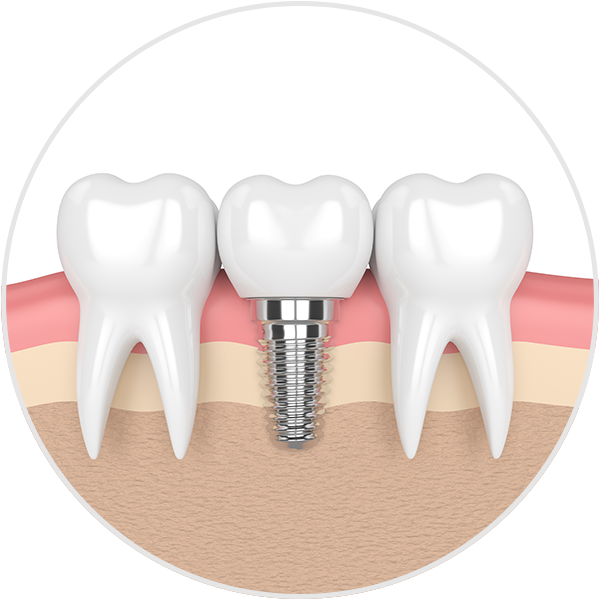
Surgical Advances for placement of Dental Implants
Using the most recent advances in dental implant technology, Dr. Mueller is able to place single stage implants. These implants do not require a second procedure to uncover them, but do require a minimum of six weeks of healing time before artificial teeth are placed. There are even situations where the implant can be placed at the same time as the tooth extraction – further minimizing your number of surgical procedures.
The Surgical Procedure
The procedure to place a dental implant takes 30 to 60 minutes for one implant and only 2 to 3 hours for multiple implants. The number of appointments and time required, vary from patient to patient. The surgeon will bring great precision and attention to the details of your case.
Prior to surgery, you may receive antibiotics and for greater comfort, intravenous sedation or nitrous oxide (laughing gas). These options are discussed with you at your consultation appointment. A local anesthetic will be administered to numb the area where the dental implant will be placed.
When you are comfortable, the surgeon makes a small incision in the gum tissue to reveal the bone, creates space using special instruments, and gently inserts the titanium implant. The top of this implant is often visible through the gum. Sometimes it is better in the early stages of healing to have the implant covered by the gum tissue.
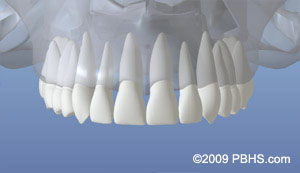
1. Normal
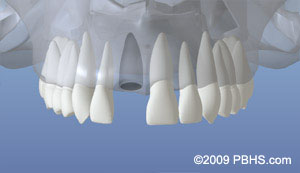
2. Tooth Loss
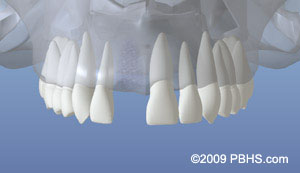
3. Healed Bone
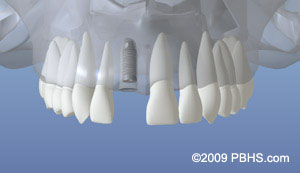
4. Implant Placed
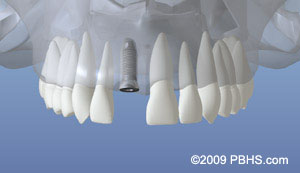
5. Healing
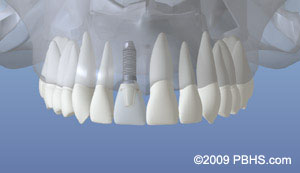
6. Implant Restored
Healing after Dental Implant Surgery
Healing time varies depending on bone quality and quantity. In some cases, implants can be restored immediately. After initial healing, a brief follow-up visit allows the surgeon to place an abutment or healing cap, aiding gum tissue maturation and giving access to the implant. Impressions may be taken during implant placement, so the crown is ready once healing is complete.
Follow-up appointments (one to four) monitor healing and determine when the restorative phase begins. Occasionally, a soft tissue graft may be performed to improve gum tissue appearance and strength around the implant.
Implants are typically placed months after extraction, though they may be placed immediately in certain cases. If a tooth has been missing for a while, bone grafting may be needed to ensure proper support for the implant.
Most implants replace a single missing tooth, with larger implants used for back teeth. Implant placement involves collaboration between a periodontist (who performs surgery and bone grafting) and a restorative dentist (who fits and creates the final prosthesis).
FREQUENTLY ASKED QUESTIONS ABOUT DENTAL IMPLANTS:
Who is a good candidate for dental implants?
Answer: Good candidates for dental implants generally have healthy gums and sufficient bone density to support the implant. Ideal candidates are those who have lost one or more teeth but maintain good overall oral health. Patients with conditions like periodontal disease, uncontrolled diabetes, or smokers might need to address these issues before proceeding with implants. A thorough evaluation by a periodontist can determine if implants are a suitable option based on individual health conditions.
What is the success rate of dental implants?
Answer: Dental implants have a high success rate, often exceeding 95%. Factors influencing success include the quality of the bone where the implant is placed, the patient’s oral hygiene, and adherence to post-surgical care. Periodontal health plays a significant role in the success of dental implants, as untreated gum disease can compromise the stability of the implant.
What can I expect during and after the dental implant procedure?
Answer: During the dental implant procedure, the area is numbed with local anesthesia, and the implant is placed into the jawbone through a small incision in the gum. After the procedure, there might be some swelling and discomfort, which can be managed with pain relievers and ice packs. Post-operative care includes maintaining good oral hygiene, avoiding hard or sticky foods, and attending follow-up appointments. Healing times vary, but osseointegration typically takes a few months before the final restoration is placed.
Are there any special care instructions for dental implants?
Answer: Caring for dental implants involves regular brushing and flossing, just like natural teeth. It’s important to maintain good oral hygiene and schedule regular check-ups with your periodontist to monitor the health of the implants and surrounding tissues. Avoiding tobacco products and excessive alcohol can also contribute to the long-term success of the implants. Your periodontist may provide specific care instructions tailored to your individual needs.
How do dental implants compare to other tooth replacement options like dentures or bridges?
Answer: Dental implants offer several advantages over traditional dentures and bridges. Implants are a permanent solution that does not require altering adjacent teeth, unlike bridges. They also provide a more natural feel and appearance and can help preserve jawbone density. Dentures, while less invasive, can be less stable and may require adjustments over time. Implants are generally considered a more durable and long-term option, although they do involve a more complex surgical procedure and a higher initial cost.